
U .S. citizens use a Social Security number (SSN) for identification purposes, and many use it during the business formation process. You might think you'd be expected to provide your SSN when filling out your LLC paperwork, but is your Social Security number necessary for starting your business?
Here, we'll discuss whether or not you can form an LLC without an SSN, and we'll show you how to make sure you're using the correct identification number to form your business.
Please note: This post contains affiliate links and we may receive a commission if you make a purchase using these links.
Can You Open an LLC Without an SSN?
You can absolutely open an LLC without an SSN, but there are a few caveats. First, the big question is: Why would a business owner not already have a Social Security number to begin with?
The biggest reason is that the prospective business owner is not a U.S. citizen, or they're a naturalized citizen who has not yet applied for an SSN. Fortunately, non-U.S. citizens and non-residents can start their own businesses and can do so even though they do not have a Social Security number.
There may also be instances where a business owner has an SSN, but they do not wish to use it for business formation. That is most likely because they wish to protect their privacy and reduce any risk of fraud or identity theft.
If you can relate to any of the above, here are the steps you'll need to take to start your LLC without an SSN.
How to Start an LLC Without an SSN
There is no one-size-fits-all solution to forming a business without a Social Security number, but there are several ways to get around it. Here's how to start:
1. Understand Different Types of Tax IDs
Everyone who will pay taxes in the U.S. — including non-citizens and non-residents — will need to have a way to identify their business to the IRS. Federal ID numbers are always nine digits, and they all work similarly in that they identify a business owner. However, the reasons for obtaining each one may differ:
Social Security Number
A Social Security number is assigned to U.S. citizens at birth or naturalized citizens upon application once their citizenship is approved. It's used for a variety of purposes, and it will typically be requested when forming a legal business entity.
When you form an LLC, you may still choose to use your SSN because of the benefit of pass-through taxation, which allows you to claim business profits on your personal tax return.
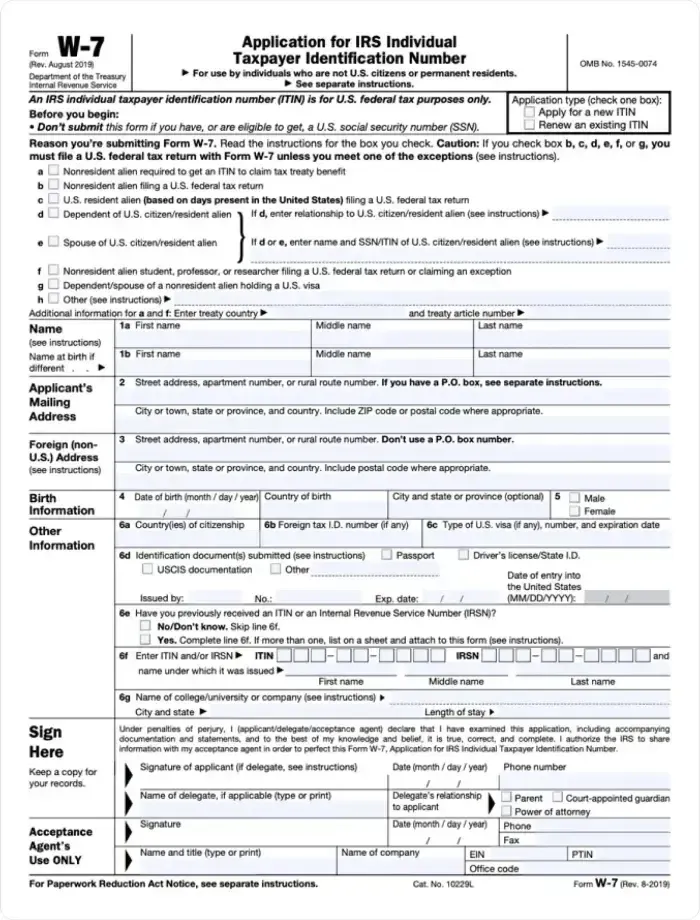
Individual Taxpayer Identification Number
An Individual Taxpayer Identification Number (ITIN) is often assigned to those who cannot obtain a Social Security number — usually non-U.S. citizens or non-residents. However, ITINs are only used for tax filing purposes, so you can't get one until you're required to file. This means you can't get one until you already have a revenue-generating business.
In this case, an ITIN is usually not the right fit, or even a possibility, for forming your LLC. The exception is if you already own a business and have been assigned an ITIN before forming the new LLC.
Employer Identification Number
An Employer Identification Number (EIN) is very common among those who cannot get an SSN or don't want to use their SSN to open a business. An EIN functions much like an SSN, but it is assigned directly from the IRS. Not every business requires an EIN, but you must have one if you:
-
Want to hire employees
-
Do not want to file taxes under your SSN
-
Want to have as much identity and privacy protection as possible
-
Want to open a business bank account or obtain business credit
An EIN is a great choice for those who don't want to use their SSN or for those who don't have or cannot get an SSN.
2. Fill out Form SS-4
If you've decided an EIN is right for your needs, you can obtain one before you form your LLC. You can apply directly with the IRS by filling out Form SS-4 to do that.
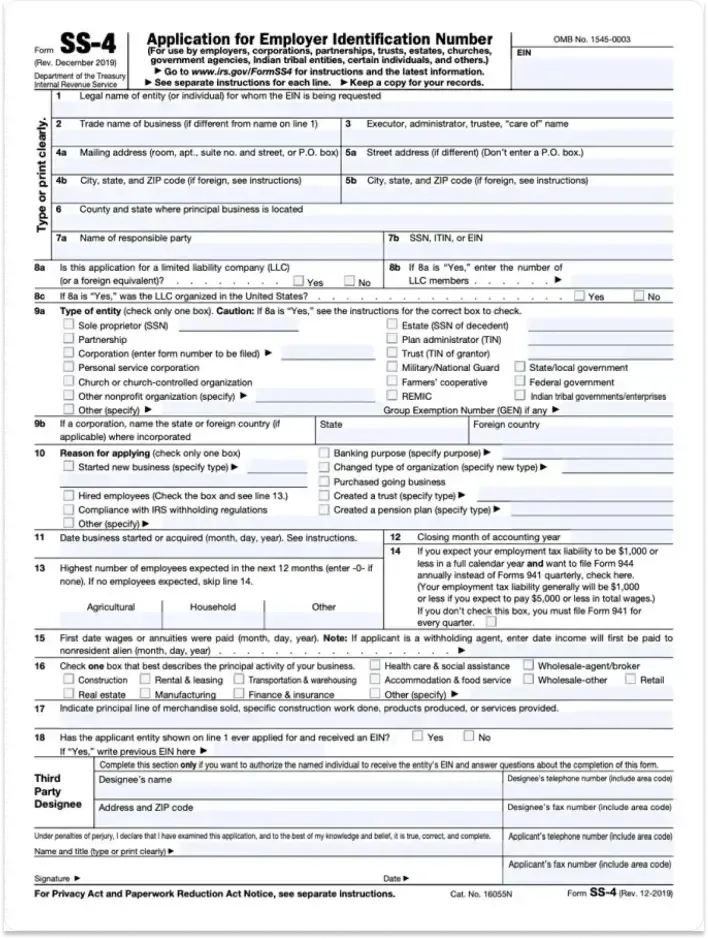
At this point, some business owners might choose to use a third-party designee to apply for and acquire an EIN. This option is not typically available to those who do not have an SSN or ITIN or those who haven't already started a business.
If you are eligible and don't want to go through the hassle of applying for an EIN yourself, you can let Bizee do it for you. We'll get your application submitted right away and have your EIN returned to you digitally so you can access it whenever you need.
3. Apply for Your EIN
Using an EIN service to apply for your employer identification number is a great idea that can save time and energy, but it isn't always possible. If you are not a U.S. citizen and you do not already have an SSN or ITIN, you will need to apply for an EIN by mail or fax through the IRS.
This is a free service offered through the IRS. In most cases, you'll have your EIN as soon as it's approved — typically within a business day.
4. File Articles of Organization
Now you're ready to roll. You can take your EIN and gather the rest of your important information to prepare to file your Articles of Organization. You'll need:
- The EIN you were assigned
- Your name and address
- A name for the business (one not already in use by another business in the state)
- A legal street address for the business
- A Registered Agent in the same state as business formation
- The names and addresses of all LLC members
It can be an overwhelming process, but help is available. With Bizee, you can take advantage of our $0 + state fee LLC, and we'll take care of all the paperwork for you — that way, you can stay focused on launching your business.
5. Plan Ahead for Tax Filing
If you're earning money in the U.S., you've got to pay taxes every year to the IRS — even business owners who aren't U.S. citizens or do not have SSNs or ITINs. If you have an EIN, you'll use it to file your tax return.
Business taxes can be tough, especially if you're not a resident or a citizen. It helps to consult with a tax professional before the April 15 deadline approaches.