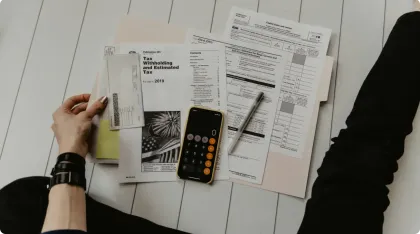
Small business marketing rests on a consistent brand, a website, a Google Business Profile, search, social media, email, and reviews. Google says the profile costs nothing to add or claim. Federal rules apply as you go: under the CAN-SPAM Act, each violating commercial email can bring penalties of up to $53,088.

Small business marketing means persuading potential customers to buy, and the U.S. Small Business Administration (SBA) calls a marketing plan one of the best ways to stay on schedule and on budget. Federal rules and guidance apply as you go: the CAN-SPAM Act for commercial email, Federal Communications Commission rules for marketing calls and texts, and the Federal Trade Commission's reviews rule and Endorsement Guides.
Start with a simple marketing plan
The best way to promote your business is the one that reaches your customers, so start with a short marketing plan. SBA says the plan describes the actions you'll take to persuade potential customers to buy. Its first topic is your target market: SBA says to describe the market's size, demographics, unique traits, and trends that relate to demand for your business.
SBA's other suggested topics are your competitive advantage, sales plan, goals, action plan, budget, and how you'll measure and update the plan. See finding your first customers and the marketing and sales section of your business plan.
Companies formed through Bizee between October 2024 and September 2026 spanned very different kinds of business. About 1 in 3 picked a professional or business-services category such as consulting, technology, or advertising (33.3%). About 1 in 5 picked a local, in-person category such as construction and repair, restaurants, retail stores, personal services, or health care (21.3%), and 7.0% picked online retail.
Source: Bizee internal data, formation orders, October 2024 – September 2026; industry is the founder's own pick from a fixed list at order time. Bizee customers are not all U.S. businesses.
SBA says most businesses use a mix of channels and optimize them over time. If customers come to you or you go to them, start with your Business Profile; if you sell online, start with search. Marketing is one step in the full list of steps to start a business.
SBA also notes that the federal government regulates advertising and labeling for a number of consumer products. For help with your plan, SBA and its network of partners offer free or low-cost counseling and training in your area.
Brand basics: name, logo, and trademark
Your brand is how customers recognize you: your name, logo, and look. SBA says to choose a name that reflects your brand identity and doesn't clash with the goods and services you offer. It lists four ways to register a business name, each legally independent:
Registration | What SBA says it does |
|---|---|
Entity name (your LLC or corporation) | Protects you at a state level |
Trademark (U.S. Patent and Trademark Office, USPTO) | Protects you at a federal level |
DBA ("doing business as" name) | Doesn't give legal protection, but it might be legally required |
Domain name | Protects your business website address |
Source: SBA, Launch your business, checked October 2026.
These registrations do different jobs. A state accepting your LLC name doesn’t clear it for trademark use, and registering a domain doesn’t give you trademark rights in the name. Check for conflicting brands before you invest in signs, packaging, or a website.
Your business name
Whatever method you use to find a name, SBA says to check it against the USPTO's official trademark database. Businesses in every state are subject to trademark infringement lawsuits, which can prove costly, SBA explains. The USPTO adds that its database covers only federal applications and registrations, not others with trademark rights but no federal registration. So it encourages searching the internet, state trademark databases, and business name databases too.
SBA adds that you're not normally required to use the same name for each registration, and a DBA lets you trade under a different identity. See how to choose a business name and registering a brand name as a DBA.
Your logo: who owns it
You can design a logo yourself, hire a designer, or use an AI tool; what matters is owning the result. A commissioned logo counts as a "work made for hire" only if it fits one of nine categories the U.S. Copyright Office lists and all parties sign a written agreement saying so. Otherwise, it is not a work made for hire. The Office says a transfer of copyright generally must be in writing and signed by the owner, but a nonexclusive transfer does not require a written agreement.
For AI tools, the Office concluded in January 2025 that copyright does not extend to purely AI-generated material. With current generally available technology, it said, prompts alone don't give you enough control to be the author, while original expression a human adds is protected, judged case by case.
Run the same search for a logo, and check whether "LLC" has to appear on your logo.
Trademarks: TM, ®, and the USPTO fee
The USPTO says you become a trademark owner when you start using a mark with your goods or services, but those rights only apply in the area where you provide them. Registration isn't required. Federal registration generally provides nationwide protection in connection with the goods or services covered by the registration, subject to earlier users’ rights and other legal limits. You can use "TM" for goods or "SM" for services without filing; ® is only for a mark registered with the USPTO, used with the goods or services listed in its federal registration.
You don’t necessarily have to form an LLC or corporation before applying, but the application must identify the correct trademark owner. You can apply based on qualifying use in commerce or a bona fide intention to use the mark. The USPTO's base application fee is $350 for each class of goods or services, or $700 for two.
You can file directly with the USPTO. If you'd rather have help, Bizee's optional trademark registration service includes trademark attorney guidance, a trademark search, and the USPTO filing; the USPTO's fee is extra. See how to trademark your business name.
This guide explains these rules but isn't legal or tax advice; confirm the details with the agency, or ask a licensed attorney or CPA about your situation.
Your website and domain
Building your own site comes down to two parts. One is a domain name, which MDN Web Docs describes as a human-readable address for a web server. The other is the web server that stores the site's files. Google says you "usually don't need to do anything except publish your site on the web" for Google to find it.
By the numbers: what founders ask about getting online. When founders contacted Bizee support about getting their business online, these were the goals that came up most. A conversation can count in several.
What founders wanted | Share of these conversations |
|---|---|
A professional email address on their own domain | 63.9% |
Picking or securing a domain name | 50.7% |
Launching a first website | 48.9% |
Connecting or moving a website or domain they already had | 20.4% |
About 1 in 3 founders who asked Bizee support about getting online expected a domain name to come with a website, not knowing the site has to be built separately. About half showed at least one clear mix-up between domains, websites, and business email.
Source: Bizee internal data, based on a random sample of Bizee customer-support conversations about websites, domains, and business email, October 29, 2025 – October 26, 2026, classified by AI from the transcripts; only conversations where the founder asked how something works are counted. Domain and email questions are over-represented in these conversations. Support contacts are not all Bizee customers, and Bizee customers are not all U.S. businesses.
SBA says your domain doesn't need to match your legal business name, trademark, or DBA. ICANN says you register a domain for a set period, typically between 1 and 10 years, and need to renew it before it expires to keep using it. See registering a domain and setting up business email and how to build a website for your small business.
Google Business Profile and local search
A Google Business Profile is free to set up: Google says you can add or claim one at no charge, and there's no way to pay for a better local ranking. To edit your info or interact with customers, you need to verify the business, Google says, which also gives you ownership of the profile.
Set up and verify your profile
Google says a business can create a profile if it has a physical location customers can visit or travels to customers where they are. Google sets the verification methods automatically and they can't be changed; the options depend on your business type, public info, region, or business hours.
Google's guidelines say your profile name should be your real-world name as used consistently on your storefront, website, and stationery, with no marketing taglines. Irrelevant legal terms such as LLC, LTD, or INC are also excluded unless signage, business cards, invoices, or other real-world proof consistently displays them as part of the name.
Google doesn't accept P.O. boxes or mailboxes at remote locations as a profile address, and a virtual office (a rented mailing address you don't operate from) isn't eligible. About 1 in 8 founders who asked Bizee support about getting online wanted to keep a home address off their website, business listings, or domain record.
Source: Bizee internal data, a random sample of support conversations about websites, domains, and business email, October 29, 2025 – October 26, 2026, classified by AI. Bizee customers are not all U.S. businesses.
If you serve customers at their locations, Google says to keep one profile for your central office with a service area and to hide your address. Its example is a plumber who runs the business from home.
How to show up in local results
Google says local results are mainly based on relevance, distance, and how well-known a business is. That last factor partly reflects how many websites link to the business and how many reviews it has. Complete, accurate, verified profiles are more likely to show up, and more reviews and positive ratings can help your local ranking.
Getting Google reviews the right way
Share your Google review link or a QR code; Google says reviewers need a Google Account, which can use a non-Gmail address. Google lets you ask for reviews that reflect a genuine experience as long as you don't offer incentives or try to influence the rating or content. Its policies also bar discouraging negative reviews or selectively asking for positive ones, and say merchants shouldn't pressure customers to review while on the premises or request specific content.
SEO basics for a small business
SEO (search engine optimization) is about helping search engines understand your content and helping people find your site, Google says. If you run a small local business, Google says you can probably do much of the work yourself.
Google adds there's no guarantee a site will be added to its index, and no secret will rank it first automatically. Some changes take effect in a few hours, others in several months, and Google suggests waiting a few weeks to assess your work. Google never accepts money to include or rank sites, appearing in its organic results is free, and advertising with Google doesn't affect your presence there. If an SEO provider guarantees first place, Google says to find someone else.
Social media: start where your customers are
Start where your customers already are. In Pew Research Center's 2026 survey, 84% of U.S. adults said they use YouTube, 70% Facebook, and 51% Instagram. Far more adults under 30 than adults 65 and older say they use Instagram and TikTok.
Platform | All U.S. adults | Ages 18–29 | Ages 30–49 | Ages 50–64 | Ages 65+ |
|---|---|---|---|---|---|
YouTube | 84% | 95% | 91% | 85% | 65% |
70% | 69% | 78% | 71% | 59% | |
51% | 79% | 64% | 41% | 21% | |
TikTok | 37% | 65% | 45% | 31% | 11% |
Platform
Source: Pew Research Center, Americans' Use of Social Media in 2026 (fact sheet, October 19, 2026; survey of U.S. adults conducted January 30 – June 18, 2026); share of U.S. adults who say they use each platform.
For posts, see finding images you're allowed to use in posts; paid partnerships have disclosure rules, covered below.
Email and text marketing: the rules
The CAN-SPAM Act covers any email whose primary purpose is advertising or promoting a commercial product or service. The Federal Trade Commission (FTC) says it isn't just for bulk email and makes no exception for business-to-business email.
Requirement | What the FTC's compliance guide says |
|---|---|
Honest header | Header information must be accurate and identify the person or business who initiated the message |
Honest subject line | It must accurately reflect the content of the message |
Say it's an ad | Disclose clearly and conspicuously that the message is an advertisement |
Your postal address | Include your valid physical postal address, for example your current street address or a post office box you've registered with the U.S. Postal Service |
A way to opt out | Explain clearly and conspicuously how to opt out, don't let your spam filter block opt-out requests, and keep processing them for at least 30 days after you send |
Honor opt-outs | Within 10 business days, with no fee, no personal information beyond an email address, and no step beyond a reply email or a visit to one web page |
Watch your vendors | Monitor what others do on your behalf; you can't contract away your legal responsibility to comply with the law |
Source: FTC, CAN-SPAM Act: A Compliance Guide for Business, checked October 2026.
Messages with only transactional or relationship content are exempt from most provisions but can't contain false or misleading routing information. The FTC says these categories are viewed narrowly. Each violating email can bring penalties of up to $53,088, and more than one person may be held responsible. That amount is the 16 CFR 1.98 maximum for penalties assessed after January 17, 2025.
Marketing texts fall under Federal Communications Commission (FCC) rules. Someone who consented under those rules to receive calls or texts can revoke that consent in any reasonable way, such as replying "stop." Revocations must be honored within a reasonable time, no more than 10 business days. The do-not-call rules bar telephone solicitations to residential subscribers whose numbers are on the national do-not-call registry. They also apply to telemarketing calls or texts to wireless numbers.
For autodialed or prerecorded-voice marketing calls to cell phone numbers, FCC rules require prior express written consent: a signed written agreement that clearly authorizes those calls to that number.
Reviews, testimonials, and influencers: the FTC's rule and guides
The FTC's consumer reviews rule took effect on October 21, 2024, and courts can impose civil penalties for knowing violations. Here's what it and the FTC's Endorsement Guides say about common practices:
Practice | What the FTC and Google say |
|---|---|
Writing, creating, or selling reviews that materially misrepresent that the reviewer exists, used the product, or what their experience was | Violation of the rule |
Incentives in exchange for, or conditioned on, a positive or negative review | Violation of the rule |
Incentives with no sentiment requirement | Not prohibited by the rule, but undisclosed incentives could violate the FTC Act; Google prohibits incentives for reviews on Google |
An officer or manager reviewing their own business without clearly disclosing the relationship | Violation of the rule, unless for a testimonial the relationship is otherwise clear |
Buying fake followers, views, or likes you knew or should have known were fake and that materially misrepresent your influence for a commercial purpose | Violation of the rule |
Asking only customers you think are happy | No specific ban in the rule, but it could violate the FTC Act; the Endorsement Guides say inviting all recent purchasers isn't unfair or deceptive; Google prohibits selectively soliciting positive reviews |
Sources: FTC Rule on the Use of Consumer Reviews and Testimonials (16 CFR Part 465) and its Questions and Answers; FTC Endorsement Guides (16 CFR 255); Google Maps content policy; Google Business Profile Help; checked October 2026.
For more, see managing reviews and your online reputation.
Influencers and paid endorsements
Paying creators or giving them free or discounted products can be a material connection under the FTC's Endorsement Guides. The Guides say such a connection must be disclosed clearly and conspicuously when it might materially affect the endorsement's weight or credibility and the audience doesn't reasonably expect it. Advertisers can be liable for misleading or unsubstantiated endorsements, even when the endorser isn't, and for not disclosing unexpected material connections.
The FTC says the brand and the influencer, not the platform, are responsible for the disclosure, and starting a post with "Ad:", "#ad", or "Advertisement" would likely be effective.
Advertising on a budget
Start with the free channels (your Business Profile and organic search), then add paid ads on a budget you control. Google Ads says a campaign's spend never exceeds 2 times its average daily budget on a given day. In a billing period, you're never charged more than 30.4 times that average daily budget: at most $304 for a $10-a-day budget.
Whatever the channel, the FTC says advertising must be truthful and not deceptive, advertisers must have evidence to back up their claims, and the law requires that proof before the ad runs.
Advertising can also be deductible: IRS Publication 334 lists it among the business expenses you may be able to deduct. To be deductible, a business expense must be both ordinary (common and accepted in your field) and necessary, meaning helpful and appropriate for your business. See which advertising costs you can deduct and small business taxes and deductions.
Before you rely on any rule here, check the official pages linked above, and ask a licensed attorney or CPA about your situation.
Measure what works and update your plan
Compare what each channel costs with the revenue it brings: SBA calls this checking for a positive return on investment (ROI). SBA notes some tactics, like print advertising or word-of-mouth campaigns, are hard to measure, and says to maintain the plan at least annually. Google's free Search Console helps you monitor your site's presence in Google Search.
Real questions from Bizee customers
These are real questions founders asked our support team about getting online between October 29, 2025, and October 26, 2026, paraphrased. Answers come from MDN, ICANN, SBA, Google, and FTC sources.
Do I need web hosting for my website to work, or is hosting only for marketing and SEO?
Your website needs a web server either way. MDN Web Docs explains that a domain name is a human-readable address for a web server, and that to publish a website you need a web server that stores its files. ICANN adds that to keep using a domain and the website or email tied to it, you need to renew it before it expires.
Is my website automatically protected by my LLC, and how do I put it under the LLC?
Forming an LLC does not register your website's name or domain: SBA says an entity name, a trademark, a DBA, and a domain name are separate, legally independent registrations. For the domain, ICANN says the registrant (the individual or entity that registers it) enters into a contract with the registrar.
How do I stop my business emails from landing in spam?
Start with authentication. Gmail's email sender guidelines say to set up SPF or DKIM email authentication for your sending domains and to keep spam rates reported in Postmaster Tools below 0.3%. For marketing emails, the FTC's CAN-SPAM rules also apply: accurate header information, an honest subject line, your valid physical postal address, and a clear way to opt out.
Bizee is NOT a law firm and does NOT provide legal advice. Use of our products and services is governed by our Terms of Service and Privacy Policy. The information you provide to Bizee is NOT protected by attorney-client privilege.