To start an online business, choose how you'll sell, test demand, pick a structure and register, then handle licenses, sales tax, online selling rules, payments, taxes, and your website. A payment app or online marketplace must send you a Form 1099-K if payments for goods or services total over $20,000 in more than 200 transactions, the IRS says.
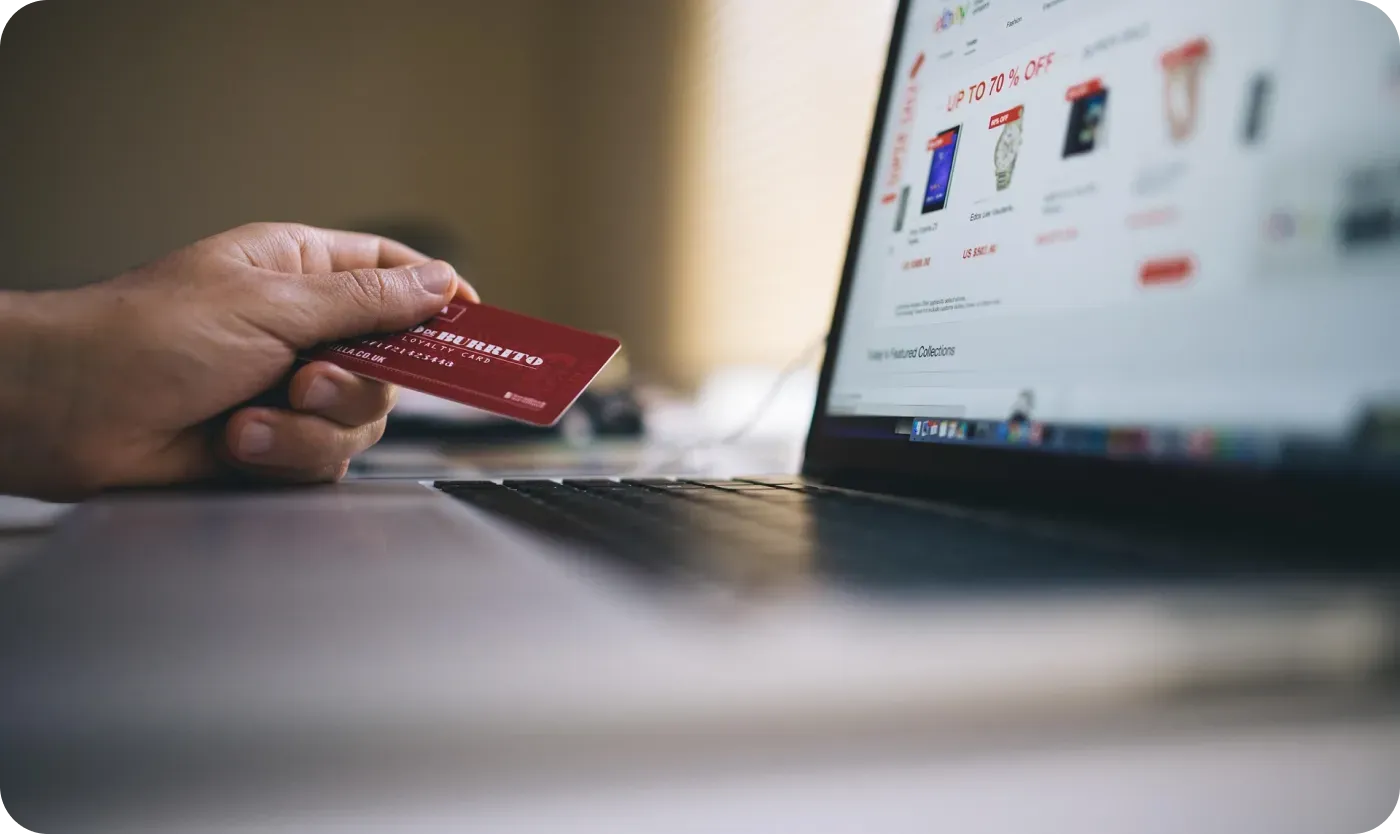
E-commerce made up 17.9% of total U.S. retail sales in the third quarter of 2026 (seasonally adjusted), according to the Census Bureau's Quarterly Retail E-Commerce Sales report.
See the full step-by-step checklist and how to start a small business.
How to start an online business: choose your selling model
The easiest online business to start is the one that fits what you already have: products to ship, a skill to sell, or a digital file.
Model | What you sell | Inventory you own | Sales tax starting point | Go deeper |
|---|---|---|---|---|
Online store on your own website | Physical products | Yes | You register and collect where a state's rules require it | |
Marketplace selling (Amazon, Etsy, and Walmart Marketplace) | Physical products | Yes | In California, Texas, and New York, marketplace rules decide who collects on marketplace sales | |
Digital products | Downloads, templates, and courses | No | Pennsylvania taxes digital products such as books, apps, and canned software sold to Pennsylvania customers (6%, unless exempt, plus 1% in Allegheny County or 2% in Philadelphia where applicable). California generally doesn't tax eBooks, apps, or software sent online without a physical copy; from January 1, 2027, prewritten software may be taxable there, but eBooks are excluded | None |
Online services | Your skills, delivered online | No | Texas: if you're engaged in business in Texas and sell taxable services there, you apply for a sales and use tax permit | None |
Dropshipping | Physical products a supplier ships for you | No | You register and collect where a state's rules require it | None |
Model
Sources: Texas Comptroller sales and use tax permit application (services row); Pennsylvania Department of Revenue digital products page and California Department of Tax and Fee Administration (CDTFA) Publication 109 and Special Notice L-1036 (digital products row); CDTFA, Texas Comptroller, and New York tax department (marketplace row). Checked November 2026.
Still choosing? See business ideas or starting online as a side hustle.
Test demand before you build
Check that people will buy before you build a store. The SBA says market research helps you find customers, and competitive analysis helps make your business unique. Compare competitors by product line or service and market segment, including market share, strengths, and weaknesses, on marketplaces too.
The SBA points to free federal data, such as the U.S. Census Business Builder.
Pick a structure and register your business
Your business structure affects how much you pay in taxes, your ability to raise money, the paperwork you file, and your personal liability, the SBA says. Before you file, confirm the rules with your state's agencies or a licensed attorney or CPA.
By the numbers: what people ask Bizee support about selling online
Topics that came up in Bizee support conversations about selling online, compared with all support conversations (a conversation can count in several):
Topic | Selling online | All conversations |
|---|---|---|
Forming the company (filing, approval, and documents) | 47.3% | 31.3% |
An EIN (federal tax ID) | 37.0% | 24.0% |
A business bank account or payment processor | 24.8% | 10.6% |
Choosing a state to form in | 11.9% | 2.0% |
Business taxes (income, state, and franchise) | 11.3% | 6.2% |
Topic
More than half of these conversations (56.8%) came from people who hadn't formed a company yet, compared with 29.1% of all support conversations.
Based on Bizee customer-support conversations (phone calls, chat, and email), April 1, 2025 to November 8, 2026. Questions are paraphrased and classified by AI from the conversations. People contact support when something is unclear or delayed, so problems are over-represented; support contacts are not all Bizee customers, and Bizee customers are not all U.S. founders.
Do you need an LLC to start an online business?
No. The SBA says you're automatically a sole proprietorship if you go into business on your own but don't register as any other kind of business. The tradeoff is liability: a sole proprietorship is not a separate entity, so you can be held personally liable for the business's debts and obligations. The SBA says LLCs protect owners from personal liability "in most instances."
Forming an LLC means filing with your state and paying its fee: $300 in Texas, $70 in California, and $125 in Florida.
See do you need an LLC to start a business and how to form an LLC.
You can file with your state yourself. If you'd rather not, our LLC formation service handles the paperwork and filing for you.
Which state to form in
Online-retail companies formed through Bizee were formed in Wyoming (17.3%) and New Mexico (11.1%) far more often than companies formed through Bizee overall (9.1% and 3.5%).
Source: companies formed through Bizee, November 1, 2024 to October 31, 2026, as recorded on the order; formation state, not where owners live or sell.
The SBA says the state where you form your business considers it domestic, while every other state views it as foreign. An LLC doing business in more than one state might need to form in one state and file for foreign qualification in the others where it's active.
California's Franchise Tax Board treats you as doing business there if, among other tests, you engage in any transaction for financial gain within California. LLCs that form or register in California, or do business there, generally owe an $800 annual tax. An LLC registered in California can still owe the tax after it stops operating, until it cancels its California registration. California uses a separate test for registration. An out-of-state LLC generally must register if it conducts repeated business transactions within California, but interstate sales alone don’t trigger that filing. Registering an out-of-state LLC in California costs $70, filed with a current certificate of good standing from the state where it was formed.
See registering your business in your state.
DBA, EIN, and BOI reporting
If you sell under a brand name, you might need to register it as a DBA ("doing business as" name) with the state, county, or city where your business is located. The SBA says most states require this if you use one, though a DBA does not give legal protection by itself. Sole proprietors can get one too; see registering a DBA.
An EIN is your business's federal tax ID number. The IRS says you need one if you have employees, will pay employment, excise, or alcohol, tobacco, and firearms taxes, or withhold taxes on non-wage income paid to a non-resident alien. It adds that partnerships, LLCs, and corporations need one to operate. The IRS also says a single-member LLC that's a disregarded entity (it hasn't elected corporate tax treatment) with no employees and no excise tax liability does not need one. It can still get one to open a bank account or if state tax law requires it. A foreign-owned U.S. single-member LLC that must file Form 5472 needs its own EIN, even if it has no employees and owes no excise tax. Here's how to get an EIN for free.
U.S. companies no longer have to file beneficial ownership information (BOI) reports with FinCEN: a final rule issued August 11, 2026, and effective August 14, 2026, made their exemption permanent.
Do you need a business license to sell online?
It depends on what you sell and where you operate: the SBA says your business activities and location decide the licenses and permits you need from your state, county, or city. Depending on the activity, you may need a federal license, permit, or registration.
The SBA's list of federally regulated activities includes importing or transporting certain animals, animal products, biologics, biotechnology, or plants across state lines (U.S. Department of Agriculture). It also includes the manufacture, wholesale, import, or sale at a retail location of alcoholic beverages (Alcohol and Tobacco Tax and Trade Bureau and local alcohol beverage control boards). Alcohol retailers register with the TTB, but state and local agencies handle retail licensing.
States tend to regulate a broader range of activities than the federal government, and retail is on the SBA's list of activities commonly regulated at the local level. The Office of the Texas Governor says Texas does not require a general business license, though licenses for a specific activity can apply at the federal, state, and local level. Pennsylvania's guidance for e-commerce and online retail says there's no general business license that all Pennsylvania businesses must get beyond the basic registration steps, though a specific license may apply to your activity.
In Washington, forming an LLC and getting a business license are separate filings. The Department of Revenue says a Washington LLC must file with the Secretary of State before it files the Business License Application. See whether you need a business license.
Cities add their own rules. Philadelphia requires a Commercial Activity License to do business in the city, including for businesses located outside the city limits, and there's no cost for it. However, some activities require an Activity License Number instead. The City of Los Angeles requires all individuals and entities conducting business activities in the city to get a Business Tax Registration Certificate, unless exempt. Chicago generally requires a city business license for a home occupation. The city doesn’t license restaurants or catering businesses as home occupations. Eligible cottage food businesses register separately with the local health department.
Working from home? See starting a business from home.
Sales tax when you sell online
Selling online can mean collecting sales tax in states where you have no physical presence: the Supreme Court's June 21, 2018, South Dakota v. Wayfair ruling eliminated the prohibition on states imposing sales tax collection responsibilities on businesses with no physical presence there.
In Bizee support conversations about sales tax or seller's permits, about 2 in 5 (41.5%) asked whether a requirement applied to them, and about 1 in 3 (34.3%) asked how to go about it.
Source: Bizee customer-support conversations, April 1, 2025 to November 8, 2026, classified by AI.
Each of the six states below sets its own test for remote sellers (Pennsylvania calls it an economic nexus threshold).
State | Remote-seller test (checked November 2026) |
|---|---|
California | Combined sales of tangible personal property for delivery in California, by you and all persons related to you, over $500,000 in the preceding or current calendar year: register with the CDTFA and collect California use tax. If all your California retail sales go through a marketplace facilitator registered with the CDTFA, you don’t need to register separately for those sales. |
Texas | Below $500,000 in total Texas revenue in the preceding twelve calendar months, no permit or use tax collection is required; total Texas revenue counts taxable and nontaxable sales into Texas, including sales for resale |
New York | More than $500,000 in gross receipts from sales of tangible personal property delivered into New York and more than 100 such sales there in the immediately preceding four sales tax quarters (both tests): register for sales tax |
Florida | Taxable remote sales over $100,000 in the previous calendar year: collect and remit sales tax. Marketplace sellers count only sales made outside a marketplace toward this threshold. |
Georgia | Over $100,000 in gross revenue from retail sales of tangible personal property delivered into Georgia, or 200 or more such sales, in the previous or current calendar year: collect and remit (a remote seller can leave out sales facilitated by a marketplace facilitator) |
Pennsylvania | Pennsylvania sales of at least $100,000 in the prior calendar year, counting all channels and taxable and nontaxable sales, with no transaction test: register and collect (a marketplace seller counts only its direct sales and sales through facilitators that don't collect for it) |
Sources: CDTFA, Texas Comptroller, New York State Department of Taxation and Finance, and the Florida, Georgia, and Pennsylvania Departments of Revenue.
See how to run sales tax for an online store.
In California, the CDTFA says a marketplace facilitator that agrees to facilitate your sales may be the retailer that must collect and pay the tax on those retail sales of merchandise. It tells sellers to ask the site's operator whether it is one and is responsible for the tax. If all your retail sales of merchandise go through a facilitator registered with the CDTFA, you don't need a seller's permit.
In Texas, the Comptroller says marketplace providers engaged in business in Texas collect. A Texas seller still needs a Texas tax permit and must file returns, even if all its sales are through a marketplace. In New York, a marketplace seller that meets any of the normal registration requirements must register and file returns even if the marketplace remits the tax.
Registration is a separate step from your federal EIN. California requires a seller's permit if you're engaged in business in California and sell tangible personal property that would ordinarily be taxable at retail. That applies to individuals as well as corporations, partnerships, and LLCs. Texas's sales and use tax permit is for those engaged in business in Texas who sell or lease tangible personal property or sell taxable services there. Neither state charges a fee, though California may require a security deposit and Texas a security bond.
About 1 in 4 Bizee support conversations about sales tax or seller's permits (26.4%) asked about a resale or reseller certificate.
A resale certificate is a separate document: the Texas Comptroller says a customer's sales tax permit number, or a copy of the permit, is not a substitute for one, and sellers keep the certificates they accept for four years.
Rules for selling online
Online sellers also answer to federal rules on shipping times, endorsements, marketing email, and children's data, plus California's privacy-policy law, each where it applies. See consumer protection rules for online sellers.
The Federal Trade Commission's (FTC's) Mail, Internet, or Telephone Order Merchandise Rule covers merchandise ordered online. The FTC says you must have a reasonable basis for any shipping time you state or, if you don't state one clearly and conspicuously, for believing you can ship within 30 days of receiving a properly completed order. If you then learn you can't ship on time, you must seek the customer's consent to the delay. Without it, you must promptly refund all the money paid for the unshipped merchandise, without being asked.
If someone endorses your products, the FTC's Endorsement Guides say a connection between the endorser and you that a significant minority of consumers wouldn't expect, and that would affect how they evaluate the endorsement, should be disclosed clearly and conspicuously, on social media too.
The CAN-SPAM Act covers commercial email, not just bulk email, and makes no exception for business-to-business messages. The FTC says each message needs accurate header information and a subject line that reflects the content. Each also needs a clear and conspicuous disclosure that it's an ad, your valid physical postal address (a registered post office box or private mailbox qualifies), and a clear and conspicuous way to opt out. The Act waives the ad disclosure for recipients who gave prior affirmative consent. The FTC also says you must honor opt-outs within 10 business days, and each separate email that violates the law can bring penalties of up to $53,088. Your opt-out method must be able to process requests for at least 30 days after you send the email.
The FTC says the Children's Online Privacy Protection Act (COPPA) applies to commercial websites and online services directed to children under 13 that collect, use, or disclose children's personal information. It also covers sites and services with actual knowledge that they do so, or that they collect it directly from users of another child-directed site. Covered operators must post a clear and comprehensive privacy policy about the information they collect from children and get verifiable parental consent before collecting it, with limited exceptions. Covered operators generally must also notify parents directly before collecting children’s personal information. They need separate verifiable parental consent to share that information with third parties, unless the sharing is integral to the site or service.
Under California's Online Privacy Protection Act, an operator of a commercial website or online service that collects personally identifiable information through the internet about California consumers who use or visit it must conspicuously post its privacy policy (an online service makes the policy available as the law describes).
Get paid: bank account, payment processors, and Form 1099-K
A separate business account makes record-keeping easier, the IRS says. A separate account can help an LLC or corporation maintain the separation between the business and its owners, but it doesn’t give a sole proprietor liability protection.
About 1 in 10 Bizee support conversations about selling online (10.5%) involved someone stuck on the documents a bank or payment processor asked for.
Source: Bizee customer-support conversations, April 1, 2025 to November 8, 2026, classified by AI.
The SBA lists some of the most common documents banks ask for when you open a business bank account: an EIN (or a Social Security number for a sole proprietorship), your business's formation documents, ownership agreements, and a business license; some banks may ask for more. See comparing business bank accounts.
A payment app or online marketplace must send you a Form 1099-K if payments you received for goods or services total over $20,000 in more than 200 transactions, though it may send one for lower amounts. Form 1099-K shows gross payments before adjustments such as refunds and processing fees. Use your own records to account for those amounts when you file. If customers pay you directly by credit, debit, or gift card, your payment card processor sends one no matter how many payments you got or how much they were for. These companies send Form 1099-K to the IRS each year and your copy by January 31. Whether or not you get one, the IRS says you must report all your income, including payments for goods you sell.
Website and domain basics
The SBA says your domain name, entity name, trademark, and DBA are legally independent registrations, and your domain doesn't need to match your legal business name, trademark, or DBA. Once you register a domain, no one else can use it for as long as you keep owning it. Renew your domain registration before it expires so you don’t risk losing the address.
Taxes on online business income
If you run your online business as a sole proprietor, the IRS has you report its income or loss on Schedule C (Form 1040). A single-member LLC that doesn't elect to be treated as a corporation is a disregarded entity. For an individual owner, its activities generally go on the owner's return (Schedule C, E, or F). If the LLC operates a trade or business, the owner is subject to self-employment tax in the same manner as a sole proprietor.
Self-employment tax is 15.3%: 12.4% for Social Security plus 2.9% for Medicare. For 2026, the Social Security part applies to the first $184,500 of your combined wages, tips, and net earnings. The IRS says you must pay it and file Schedule SE if your net earnings from self-employment were $400 or more (church employee income has a separate $108.28 test).
Sole proprietors generally have to make estimated tax payments (Form 1040-ES) if they expect to owe $1,000 after subtracting withholding and refundable credits, and those amounts cover less than the smaller of 90% of this year’s tax or 100% of last year’s tax. A higher prior-year percentage applies to some taxpayers. You don't have to pay estimated tax for the current year if you meet all three IRS conditions: no tax liability for the prior year, U.S. citizen or resident alien status for the whole year, and a prior tax year that covered 12 months.
See small business taxes in detail.
Tax and registration rules change, so check the agency pages linked above before each filing, or ask a CPA or licensed attorney.
Real questions from Bizee customers
Real questions people asked Bizee support about starting and selling online (April 1, 2025 to November 8, 2026), paraphrased with details removed. Answers come from government and marketplace sources.
Do I need an LLC to sell on Amazon or other online marketplaces?
Not for Amazon: its registration guide says you don't need to be an LLC or otherwise incorporated, and you can sign up as an individual. Etsy also lets you sign up as an individual or sole proprietor. Requirements vary by marketplace. Walmart Marketplace, for example, asks for a business tax ID or business license number and doesn’t accept a Social Security number in place of a business tax ID. Without registering another kind of business, the SBA says, you're a sole proprietor and can be held personally liable for business debts. It also says an LLC protects owners from personal liability "in most instances."
Is a resale certificate the same as a seller's permit, and how do I get one?
No. The Texas Comptroller says a customer's sales tax permit number, or a copy of the permit, is not a substitute for a resale certificate. In California, the CDTFA says any document can serve as a resale certificate if it shows the buyer's business name and address, seller's permit number (or why none is needed), a description of the items, the words "for resale," and the buyer's signature. To buy goods for resale without paying sales tax at the time of purchase, fill out Texas Form 01-339 or California Form CDTFA-230, depending on which state’s rules apply, and give it to your supplier.
Do I need an EIN before I can open a seller account on Amazon or another marketplace?
Not always. Amazon's tax interview accepts a Social Security Number (SSN), an Individual Taxpayer Identification Number (ITIN), or an EIN. Walmart Marketplace asks for a business tax ID or business license number and doesn't accept an SSN. An EIN is free: the IRS says you never have to pay a fee for one, and it issues the number immediately when it approves an online application.
Which NAICS code should I choose for an online retail or e-commerce business?
There's no separate code for selling online. The Census Bureau says the North American Industry Classification System (NAICS) now classifies retail by the types of products sold rather than the selling method. There's no distinction between brick-and-mortar stores and online retail, and Electronic Shopping and Mail-Order Houses (454110) has been combined with storefront industries.
Bizee is NOT a law firm and does NOT provide legal advice. Use of our products and services is governed by our Terms of Service and Privacy Policy. The information you provide to Bizee is NOT protected by attorney-client privilege.