Start an LLC: Step-by-Step Guide
Welcome to your ultimate guide to forming an LLC, tailored specifically for aspiring startup founders. If you're feeling overwhelmed by the intricacies of business structures, you're not alone. Let's demystify the process and help you understand why an LLC might be the perfect choice for your startup.
Bootstrapped, Founder Led, Independently Owned Since 2004 With Over 1,000,000 Entrepreneurs Served!
Launch Your LLC with Confidence
Starting your LLC is a crucial step in your entrepreneurial journey. With Bizee, you get the guidance, support, and resources needed to make the process seamless and stress-free.
Pick the package that works best for your business formation period. Each package is eligible for one free year of Registered Agent service from Bizee.

Basic
$0 + state fee
One-time paymentOur core features for the lowest price

Standard
$199 + state fee
One-time paymentComprehensive features to get your business started

Premium
$299 + state fee
One-time paymentFull-service features at the best value
A Comprehensive Guide for Startups
1. What Is An LLC?
An LLC, or Limited Liability Company, blends the best aspects of sole proprietorships and corporations. You get the straightforward taxation of a sole proprietorship but with the robust liability protection of a corporation. This means your personal assets—like your home and savings—are shielded from business debts and lawsuits. It’s like having the best of both worlds, without the usual headaches.
For many, the term ’’LLC’’ sounds complex, but think of it as a smart, flexible shield for your business. With an LLC, your business’s profits and losses pass directly to your personal income, simplifying taxes. Plus, your protection from personal liability for the company’s financial obligation is even stronger than with a limited partnership structure.
2. Is Starting An LLC Right For You?
Choosing the right business entity is crucial—it’s like laying the foundation for your future skyscraper. LLCs are particularly beneficial for startups because they offer simplicity and protection. If you’re a sole proprietor or have a small team, an LLC can provide the safety net you need while keeping things straightforward.
Consider this: businesses like real estate agencies, financial advisory firms, and even coffee shops thrive as LLCs. Why? Because the structure allows them to protect personal assets and avoid double taxation. However, not every business can or should form an LLC. Financial institutions like banks and insurance companies often face regulatory hurdles, and certain professionals in states like California (such as architects and healthcare providers) are restricted from forming LLCs.
If your startup aims to attract investors, forming an LLC might complicate things due to certain investment restrictions. Similarly, nonprofits often find the LLC structure too complex, given the stringent IRS conditions and varying state laws.
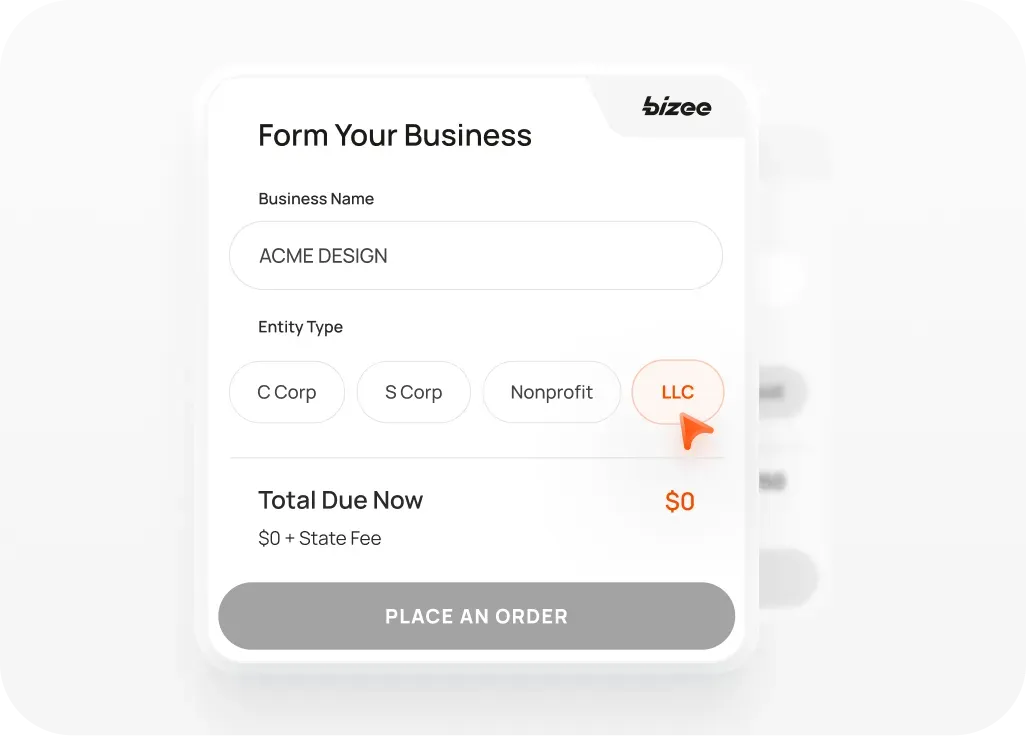
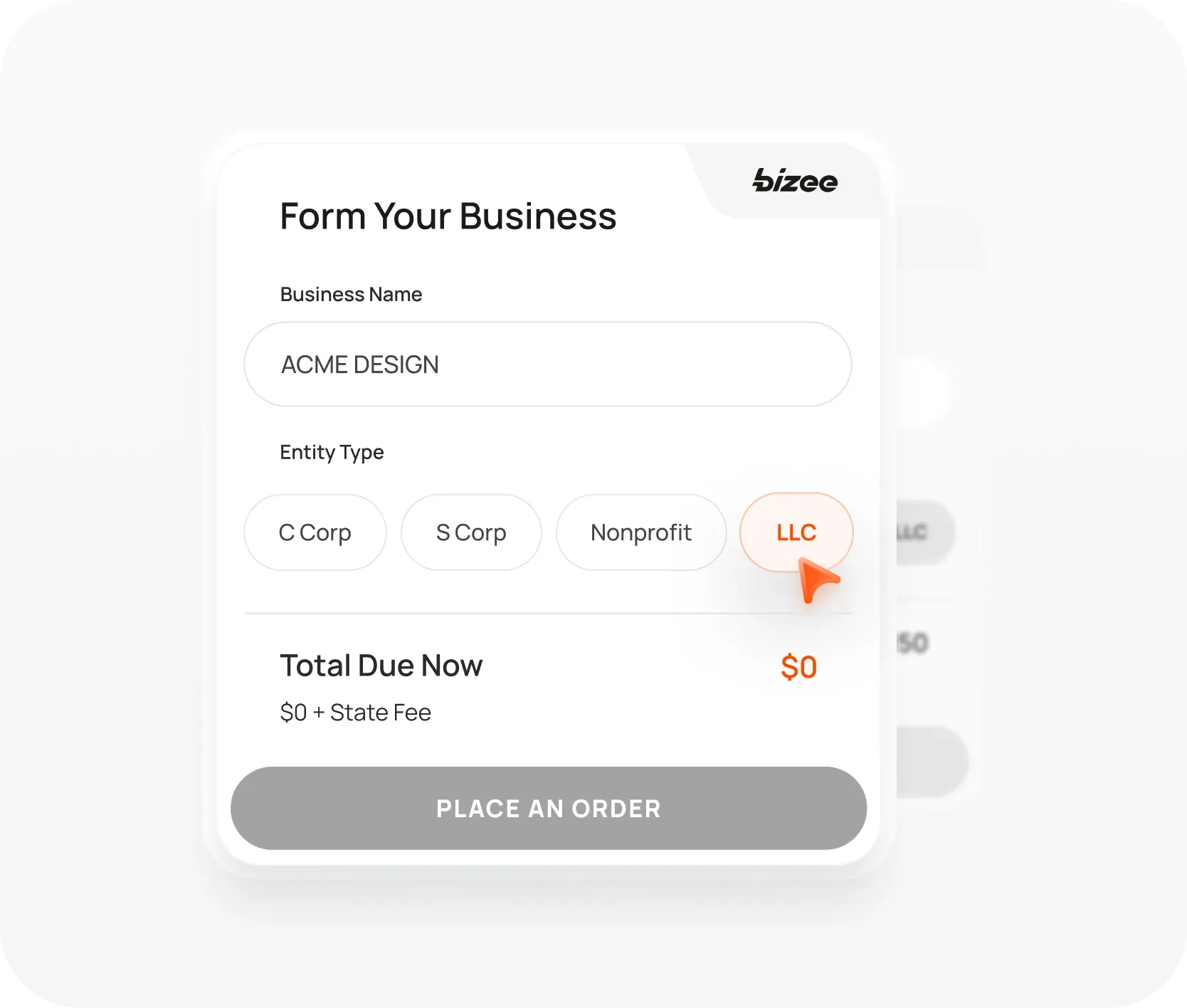
Form My LLC
Entrepreneurship is booming, and we're proud to be one of America's fastest-growing companies. Here's how you can start your LLC in six straightforward steps:
Your business name is the first impression you make. It's essential to pick a name that stands out and accurately represents your brand. In addition to selecting a unique name, you'll need to include a designator like "LLC" or "Limited Company" to indicate your business structure.
Tips:
- Use our Business Name Search tool to check the availability in your state.
- Not settled on a business name yet, our Name Generator can help.
Your LLC needs an official business address. This could be your home address if you're running a home-based business, a rented office space, or even a virtual address. Remember to check your state's regulations, as some states do not accept P.O. Box addresses.
Pro Tip:
A Virtual Address can provide privacy and the flexibility to manage your mail from anywhere. Check out our Virtual Address Service for a reliable solution.A Registered Agent receives official state correspondence on behalf of the company and must be physically available during business hours. While you can act as your own registered agent, we recommend using a professional service to avoid the hassle and maintain privacy.
Why Choose Us?
With any of our business formation packages, you get one year of Registered Agent Service for free. Let us handle the details so you can focus on growing your business.You'll need to submit the names and addresses of all your LLC members to the state. This step is straightforward but crucial for maintaining transparency and compliance.
Note: You can use street addresses or P.O. boxes for your LLC members' addresses, depending on your state's requirements.When filing your LLC, you must state the purpose of your business. This can be a specific description or a broad statement like "any lawful purpose." If you're still refining your business idea, a general statement will suffice and gives you the flexibility to expand later.
Quick Tip:
Keeping it simple with "any lawful purpose" covers most business activities
and can save time during the filing process.The final step is to file your Articles of Organization with the state and pay the associated fees. This document officially creates your LLC. Filing can be done online or by mail, depending on your state.
Quick Tip:
Bizee handles all the paperwork and filing for you, ensuring everything is done correctly and efficiently. Save time and reduce stress by letting us take care of this crucial step.
Types of LLCs

Single-Member LLC
Perfect for solo entrepreneurs. This type of LLC has only one owner, or member, but provides the same benefits of liability protection and pass-through taxation as a multi-member LLC. Single-member LLCs who elect to be taxed as sole proprietors are also known as disregarded entities.

Multiple-Member LLC
Ideal for startups with multiple founders. This structure allows for shared ownership, with profits and losses divided among members. It offers even stronger liability protection than limited partnerships while maintaining operational flexibility.
Member-Managed LLC
The most common type of LLC, member-managed LLCs allow all owners to actively run the business. Decisions are made collectively, making this a popular choice for small businesses where owners are hands-on.
Manager-Managed LLC
Suitable for businesses where some members prefer to remain passive. This type of LLC designates specific managers to handle the day-to-day operations, which can be a single person or a group, freeing other members from active management duties and self-employment taxes. Some states also allow the members to stay anonymous.
Series LLC
A Series LLC allows you to create multiple, separate entities (or series) under one umbrella company, each with its own assets, liabilities, and members. Ideal for businesses with diverse operations or investments. This type of LLC is available in Alabama, Arkansas, Delaware, Illinois, Indiana, Iowa, Kansas, Missouri, Montana, Nevada, North Dakota, Oklahoma, Tennessee, Texas, Utah, Virginia, Washington, and Wyoming.
Professional LLC
Professional Limited Liability Companies are reserved for owners who intend to offer services with professional licensing requirements. About half of U.S. states use PLLCs and the other half do not. In addition to professional licenses with their own governing bodies, the state’s licensing department can help you determine if you need a license and/or a PLLC business structure.
Family LLC
This is an informal label for LLCs formed to facilitate estate planning. Essentially, it uses the LLC business structure to minimize gift and inheritance taxes. Nevada is one example of a state that does offer a formal business structure–known as a Restricted LLC–that’s commonly used for estate planning.
L3C (Low-Profit Limited Liability Company)
Blending the flexibility of an LLC with a social mission, an L3C is a for-profit entity with a stated charitable or educational goal. Currently available in 10 states, this structure is ideal for businesses aiming to achieve both financial and social objectives, providing a structure that appeals to social entrepreneurs and impact investors.
Benefits of an LLC
Every savvy entrepreneur knows that weighing the pros and cons is essential. Let’s dive into why an LLC could be your startup’s best friend.

Pros

Limited Liability Protection
Even more than limited liability partnerships, LLCs offer some of the strongest available protections for your members’ personal assets.
Pass-Through Taxation
Simplify taxes by merging your business income with your personal income.
Flexible Management
Operate your business how you see fit, whether as a member-managed or manager-managed LLC.
No Ownership Restrictions
Partner with anyone, including foreign nationals.
Add as many members to the LLC as you need.
Minimal Compliance
Enjoy fewer regulations compared to corporations. Many LLCs simply need a registered agent and to file an annual report.
Versatile Tax Status
Opt to be taxed as a sole proprietor/partnership or as an S Corp to benefit your business.

Cons

Franchise Taxes
Some states impose income-based or flat-fee taxes on all businesses other than sole proprietors.
Strict Record-Keeping
Maintaining clear separation between personal and business finances will increase your bookkeeping needs.
Investor Restrictions
While LLCs allow for an unlimited number of members, there are some restrictions on the allowable types of investments.
Lacks Partnership Structure
Some professionals like lawyers and accountants prefer the rigid, collaborative nature of limited partnerships.
What to Expect from Bizee Services and Support
Join over 1,000,000 entrepreneurs who have chosen us to streamline their business formation process.
See What Our Clients Have to Say…

Support
These reviews are only a snapshot of the 20,000+ positive reviews we’ve received just on Trustpilot.
We offer the best customer support in the industry, earned from decades of experience. Most of the time, starting an LLC is a straightforward process, but we’ve seen it all—from simple typos to truly unique situations that even state governments didn’t anticipate.

Formation And Compliance
State-by-State LLC Rules
From filing costs to processing times, from different types of LLCs to accepted name designators, from tax implications to compliance requirements, check out our comprehensive state-by-state guides to LLC formation and compliance.

Frequently Asked Questions
If you begin operating as a business by yourself or with someone else you will be considered a sole proprietor or a partnership unless you specifically file for an LLC. However this can leave your personal assets vulnerable and for that reason we recommend forming an LLC. Learn how to convert your sole proprietorship into an LLC.
The only cost to form an LLC is the state filing fee, but there are often compliance costs to staying in good standing with your state. Unless serving as your own agent, you must maintain a Registered Agent Service for your LLC. This applies to newly formed LLCs too, but with Bizee, new LLCs get one free year of Registered Agent Service. Submitting an Annual Report is the other common cost of owning an LLC. Aside from a handful of states who do not require a filing fee, this may cost anywhere from $10-$500.
Some states have no income tax, but most have at least a personal income tax that applies to pass-through income. A few states also levy franchise taxes on LLCs regardless of whether the company generates income. All-in-all, the annual cost to own an LLC is usually at least $100 but rarely over $1,000 (not counting federal and state tax liabilities).No, Limited Liability Companies have a distinct business structure and legal status from corporations on both the state and federal level. There are numerous practical differences, but the main statutory difference is that LLCs cannot sell company shares or stocks and are thus limited in how they raise investment capital. Notably, however, an LLC does have the same limited liability responsibilities as a corporation.
If you need to make a change to your LLC, you'll need to file an Amendment by contacting your Secretary of State. Not all changes need to be amended, but generally, any changes to your Articles of Organization will need to be filed. File Articles of Amendment with Bizee.
LLCs can be taxed differently depending on whether they are single member or have multiple members, and whether or not you elect to be taxed as a corporation. You can speak with your accountant for more information. Learn more about LLC taxes and smart financial planning for your business.
